Case Study
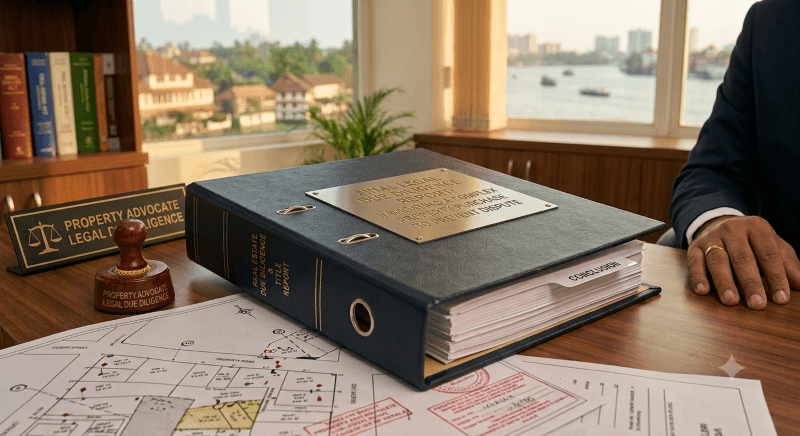
Kochi Property Advocate Prevents a Costly Real Estate Dispute Through Legal Due Diligence
Introduction
Real estate transactions often represent one of the largest financial commitments an individual or business will make. Whether purchasing a residential apartment, commercial property, villa, or land for development, buyers frequently focus on price, location, and investment potential. However, overlooking the legal aspects of a transaction can result in prolonged litigation, financial loss, and ownership disputes.
A property that appears legally sound may carry hidden risks such as defective title, encumbrances, unauthorized construction, pending litigation, unpaid statutory dues, or non-compliance with local regulations. These issues often come to light only after the transaction has been completed, making resolution expensive and time-consuming.
This case study highlights how a Kochi property advocate helped a client avoid a significant real estate dispute by conducting comprehensive legal due diligence before the purchase. Through meticulous verification of property records, title documents, regulatory approvals, and contractual terms, the legal team identified critical risks that could have jeopardized the client's investment.
Client Background
The client was an entrepreneur based in Kochi who intended to purchase a premium commercial property for expanding business operations. The property was located in a rapidly developing commercial area and appeared to be an attractive investment due to its strategic location and competitive pricing.
The seller represented that the property had a clear title and all statutory approvals. The client had already negotiated commercial terms and was preparing to execute the sale agreement.
Before making the final payment, the client engaged TGC Legal to conduct an independent legal due diligence review to ensure the investment was legally secure.
Challenges Identified During Due Diligence
At first glance, the transaction appeared straightforward. However, a detailed legal examination revealed several concerns that had not been disclosed during negotiations.
1. Incomplete Chain of Title
The historical ownership documents contained inconsistencies regarding previous transfers. Certain supporting documents relating to inheritance and earlier conveyances were either missing or inadequately documented.
Without a complete chain of title, future ownership claims could not be entirely ruled out.
2. Existing Encumbrances
A search of public records revealed entries indicating financial liabilities associated with the property.
Although the seller claimed that all loans had been settled, documentary evidence confirming the release of charges had not been updated in the relevant records.
Purchasing the property without resolving these issues could have exposed the buyer to avoidable legal complications.
3. Municipal Approval Concerns
The legal team reviewed the sanctioned building plans, occupancy certificates, and municipal approvals.
Several structural modifications carried out over the years appeared to differ from the originally sanctioned plans.
Such deviations could potentially result in regulatory action or complications during future resale or financing.
4. Pending Litigation
Further investigation revealed that a civil dispute involving a previous owner had not been fully concluded.
Although the current seller was not directly involved, the litigation had implications that required careful legal evaluation before proceeding.
Ignoring ongoing litigation could have affected the buyer's ownership rights.
5. Contractual Risks
The draft sale agreement prepared by the seller favored the vendor significantly.
It contained clauses that:
- Limited the seller's future liability.
- Offered insufficient representations and warranties.
- Did not adequately address title defects.
- Failed to provide meaningful indemnity protections.
Accepting these terms without modification would have increased the client's legal exposure.
Legal Due Diligence Strategy
TGC Legal adopted a systematic due diligence process to evaluate every legal aspect of the proposed transaction.
Comprehensive Title Verification
The legal team reconstructed the property's ownership history over multiple decades.
This involved examining:
- Previous sale deeds
- Gift deeds
- Partition documents
- Settlement deeds
- Inheritance records
- Revenue records
- Mutation entries
Each transfer was analyzed to verify the legality and continuity of ownership.
Encumbrance Verification
Detailed searches were conducted to determine whether the property was subject to:
- Mortgages
- Bank charges
- Court attachments
- Government acquisition notices
- Tax liabilities
- Other registered encumbrances
The seller was required to produce documentary evidence proving that earlier financial obligations had been legally discharged.
Regulatory Compliance Review
The legal team reviewed compliance with applicable municipal and planning regulations, including:
- Approved building plans
- Completion certificates
- Occupancy certificates
- Zoning compliance
- Land use permissions
- Building permit documentation
Any deviations were identified and explained to the client along with their legal implications.
Litigation Assessment
Court records were examined to understand the status and legal impact of pending proceedings.
Rather than relying solely on the seller's representations, independent verification confirmed the extent of the litigation and its potential consequences.
The client received a detailed risk assessment before making any investment decision.
Contract Negotiation
TGC Legal revised the proposed sale documentation to better protect the purchaser.
Key improvements included:
- Stronger title warranties.
- Detailed seller representations.
- Comprehensive indemnity provisions.
- Conditions requiring dispute resolution before completion.
- Mandatory production of updated statutory documents.
- Clear timelines for compliance.
These revisions substantially reduced the client's contractual risks.
Resolution
Following negotiations supported by the legal findings, the seller agreed to address several deficiencies before the transaction proceeded.
The seller:
- Produced missing ownership documentation.
- Cleared outstanding encumbrance-related issues.
- Updated statutory records where necessary.
- Agreed to revised contractual protections.
- Provided additional legal assurances regarding ownership.
Certain regulatory concerns required further clarification before completion, and the transaction timeline was adjusted accordingly.
Only after satisfactory compliance was the client advised to proceed with the purchase.
Results Achieved
The legal due diligence process helped the client avoid significant legal and financial exposure.
Key outcomes included:
Protected Investment
The client avoided purchasing a property with unresolved legal uncertainties that could have resulted in future disputes.
Improved Title Security
Ownership documentation was strengthened before completion, reducing future title-related risks.
Better Contractual Protection
Revised agreements provided stronger legal remedies if undisclosed issues emerged after completion.
Reduced Litigation Risk
Potential disputes were identified before the transaction rather than after ownership had changed hands.
Increased Confidence
The client completed the acquisition with greater confidence, knowing the investment had undergone comprehensive legal scrutiny.
Why Legal Due Diligence Matters in Property Transactions
Many buyers assume that registration alone guarantees ownership. In reality, registration only records a transaction; it does not independently confirm that the seller possesses a legally marketable title.
Professional legal due diligence examines numerous factors beyond the sale deed, including:
- Historical ownership
- Encumbrances
- Government approvals
- Court proceedings
- Regulatory compliance
- Revenue records
- Contractual protections
- Tax liabilities
Skipping these investigations may expose buyers to avoidable litigation, financial losses, delays in financing, or restrictions on future resale.
Whether purchasing residential property, commercial premises, villas, apartments, or investment land, engaging an experienced property advocate before signing transaction documents significantly reduces legal risks.
Conclusion
Real estate transactions involve far more than negotiating price and completing registration formalities. Hidden legal defects can remain undiscovered until long after ownership changes hands, resulting in expensive disputes that may take years to resolve.
In this case, comprehensive legal due diligence enabled the client to identify title inconsistencies, regulatory issues, contractual weaknesses, and potential litigation before completing the purchase. By addressing these concerns proactively, the client safeguarded a substantial investment and proceeded with confidence.
For individuals, businesses, NRIs, developers, and investors acquiring property in Kochi or elsewhere in Kerala, engaging an experienced property advocate before finalizing any transaction can be one of the most valuable investments in protecting long-term ownership rights.
Frequently Asked Questions (FAQs)
Why should I hire a property advocate before buying property in Kochi?
A property advocate verifies ownership, examines title documents, reviews approvals, identifies legal risks, and ensures the transaction complies with applicable laws before you invest.
What is legal due diligence in a real estate transaction?
Legal due diligence is the process of examining ownership records, encumbrances, court cases, approvals, revenue documents, contracts, and regulatory compliance to identify legal risks before purchasing property.
Can legal due diligence identify hidden disputes?
Yes. A thorough legal review may uncover pending litigation, title defects, unpaid dues, unauthorized construction, or other issues that may not be disclosed by the seller.
What documents are typically verified during property due diligence?
Commonly reviewed documents include sale deeds, title deeds, encumbrance certificates, mutation records, tax receipts, approved building plans, occupancy certificates, possession certificates, revenue records, and identity documents of the parties.
What is an encumbrance certificate, and why is it important?
An encumbrance certificate helps identify registered financial liabilities, mortgages, or transactions affecting the property. It is an important component of title verification but should not be the only document relied upon.
Can I purchase property if litigation is pending?
It depends on the nature and impact of the litigation. A property advocate should evaluate the case and advise whether the risks can be managed or whether the transaction should be postponed or avoided.
Does registration guarantee a clear property title?
No. Registration records the transfer of ownership but does not guarantee that the seller had a legally valid and marketable title. Independent legal verification remains essential.
Why is reviewing the sale agreement important?
A properly drafted sale agreement allocates risks appropriately, includes seller warranties, provides indemnities, establishes timelines, and protects the buyer if legal issues arise after the transaction.
Share on Social Media
Similar Cases
How an International Arbitration Lawyer Answered a Foreign Award Enforcement Against a Kerala Seafood Exporter
How Copyright Infringement Attorneys Stopped a Builder Reusing a Kochi Architect's Drawings Before Construction
How Deed Registration of a Conditional Gift Protected an Elderly Kerala Parent's Right to Maintenance
How a Business Contract Lawyer Rebuilt a Bengaluru Facility Services Agreement for the Labour Codes
How a Data Privacy Advisory Service Prepared a Kochi EdTech for DPDP Children's Data Rules
How Litigation Attorneys Framed a Kochi Traders Association Drainage Complaint as Public Interest Litigation
Why a Kochi Technology Firm Asked an Employment Lawyer Near Me to Rebuild Its Exit Terms
How a Family Company Moved Shares After an Intestate Death, and Why Will Registration Would Have Helped
How IP Law Firms in India Approach Design Registration for a Kerala Consumer Product Launch
How a Dispute Litigation Lawyer Used Section 12A Mediation to Settle a Kochi Supply Contract Claim
How a Kerala High Court Lawyer Answered a Licence Refusal for a Manufacturer Through Article 226
How a Property Legal Opinion Rebuilt a Broken Title Chain for a Kochi Land Aggregation
How a Trademark Objection Reply Carried a Kochi Consumer Brand Through Examination and Opposition
How an Ernakulam Engineering Firm Built Trade Secret Protection Without a Dedicated Indian Statute
How Tax Litigation Lawyers Answered an Indirect Tax Demand for a Kerala Manufacturer
How a Kerala IT Company Rebuilt Its POSH Committee and Fixed a Broken Inquiry Timeline
How a Kochi Supplier Achieved MSME Delayed Payment Recovery Through the Facilitation Council
Kochi Property Advocate Prevents a Costly Real Estate Dispute Through Legal Due Diligence
Protecting a Software Company's Source Code with Copyright Attorneys
POSH Corporate Services: Transform Outdated POSH Policies into Compliant Frameworks
Structuring Multi-User Software Licensing Agreements for Enterprise Clients
Securing a SaaS Startup's Confidential Information Through a Non Disclosure Agreement