Case Study
Key Takeaways
- The Designs Act 2000 protects the shape, configuration, pattern and ornament of an article, judged solely by the eye.
- A design must be new or original and must not have been published anywhere before the filing date.
- Publication destroys novelty. A trade fair, a catalogue, a social post or a distributor sample can all count.
- Registration runs for ten years from filing, extendable by five, and it is not renewable beyond that.
- Function is excluded. A shape dictated purely by how the article works belongs to patent law, not design law.
Table of Contents
- Executive Summary
- Client Overview
- Business Challenges
- Business Objectives
- Solution Strategy
- Technologies and Tools Used
- Implementation Process
- Business Results
- Lessons Learned
- Frequently Asked Questions
- Conclusion
Executive Summary
Most enquiries that reach IP law firms in India about product shape arrive too late. A design has already been shown, and the question is what can still be saved.
This one arrived in time, narrowly. A Kerala manufacturer of household consumer durables had developed a new housing for an existing product line. The shape was distinctive and it had cost real money in tooling.
The launch was scheduled around a trade exhibition. Marketing had already prepared the stand and had photographed the product for a catalogue. Nothing had been published yet, but the material was ready to go out in a fortnight.
That fortnight was the whole matter. Under the Designs Act 2000, a design must be new or original and must not have been disclosed to the public anywhere before the filing date. A trade stand is a disclosure.
We stopped the catalogue, filed the design application, and then let the launch proceed. Alongside it we filed a second application for a related variant, and we reviewed the tooling contract, which had said nothing useful about who owned the design.
The registration protects appearance for ten years from filing, extendable by five. What it does not protect is function, and separating the two was the substantive legal work on the file.
Launching a product with a distinctive shape this quarter? Read our intellectual property approach, or write to TGC Legal.
Client Overview
The client manufactures household consumer durables from a plant in Kerala and sells across South India through distributors and online marketplaces.
Its products are functional goods where appearance drives a meaningful part of the purchase decision. Competing products perform similarly, so shape and finish carry the differentiation.
The company had registered trade marks for its brand name and logo. It had never registered a design, and nobody internally had considered that appearance was separately protectable.
That gap is common. Trade mark protection is well understood because the brand name is visible on every invoice. Design protection is invisible until a competitor copies a moulding, at which point the absence is expensive.
Product development runs on a short cycle. A new housing goes from concept to tooling in months, and the commercial pressure is always to show it early. That pressure is precisely what destroys design novelty.
Do your product launches happen before your filings? Explore our IP advisory work, or ask TGC Legal.
Business Challenges
Four problems sat on this file. Only one of them was a legal question in the ordinary sense.
Why does showing a product before filing destroy design rights?
Because novelty is tested against everything already available to the public. Section 4 of the Designs Act 2000 prohibits registration of a design that has been disclosed to the public anywhere in India or abroad before the filing or priority date.
That standard is strict and it is unforgiving. There is no general grace period of the kind some jurisdictions allow. A single catalogue, a marketplace listing, a distributor sample or a photograph on a public social account can defeat the application.
The consequence is not merely refusal at the registry. A registration obtained despite prior publication can be cancelled under Section 19, which means the problem surfaces later, usually when the design is being enforced against a copier.
What is the difference between design protection and patent protection?
Design law protects appearance. Patent law protects how something works. The Designs Act says so directly, excluding from registration any feature of shape that is dictated solely by the function the article performs.
On this product the two were entangled. Part of the housing profile existed to improve airflow, and part existed purely to look distinctive. The functional part was not registrable as a design.
Separating them required going back to the design team and asking, feature by feature, why each curve was there. That conversation took two sessions and it produced a much stronger application, because the claim to appearance was no longer diluted by features that could be attacked as functional.
Who owns a design created with an external tooling partner?
Whoever the contract says, and if the contract is silent the position becomes arguable. The client tooling partner had contributed to the housing profile during manufacturability review.
The development agreement covered price, delivery and defect liability. It said nothing about intellectual property in the design of the article itself, which is a very common omission in manufacturing contracts.
Filing an application in the client name while an unresolved contribution sat with a supplier would have created a weakness that a determined opponent could use. The ownership had to be settled before filing, not afterwards.
What commercial risk followed from having no design registration?
Copying, and no clean remedy against it. Without registration the client would have been left arguing passing off, which requires proof of reputation in the shape itself.
That is a demanding standard. Proving that consumers associate a particular housing profile with one manufacturer takes survey evidence and time, and it usually fails for a product only months old.
A registered design converts that difficult argument into a straightforward one. Infringement under Section 22 turns on whether the impugned article is a fraudulent or obvious imitation, judged by the eye. That is a far more workable test.
Sharing drawings with a tooling partner before the contract is signed? Read more on IP protection, or speak to TGC Legal.
Business Objectives
The objectives were set in a single short meeting, because the timeline left no room for a longer one.
What did the manufacturer need before the exhibition?
A filing date. Everything else could follow. Once an application is on file, the launch can proceed and later disclosure does not defeat the design.
That reframed the whole exercise. The question was not how to obtain a registration, which takes months. It was how to secure a date within a fortnight, with an application complete enough to survive examination.
Speed and completeness pull against each other. We resolved it by concentrating effort on the representations, because those define what is protected and they are the hardest element to fix later.
Why file a second application for a variant?
Because competitors copy around a registration rather than through it. A single registration on one housing profile invites a near copy with a slightly altered proportion.
The client had developed a variant of the same housing for a larger unit in the range. Filing both meant the protected territory covered the shape as it would actually appear across the line.
Each design must be filed for a specific article and class, so the second filing was a separate application rather than an addition to the first. That is administratively duller and commercially much stronger.
What defined success for the product team?
Three things. The launch happening on the announced date, with no delay caused by the legal work. A filing date preceding any public disclosure. And clean ownership, with nothing left arguable between the client and its tooling partner.
Nobody asked how likely enforcement would succeed against a hypothetical copier. That is the right instinct, because the answer would depend on the copy and on the court.
What the team wanted was a right that exists and can be asserted. Whether it needs asserting is a question for a different year.
Do you know which of your product shapes are still unpublished? Explore our IPR services, or contact TGC Legal.
Solution Strategy
The strategy had a single organising rule. Nothing goes public until the application number exists.
Everything else, the ownership assignment, the variant filing, the contract fix, could be done in parallel or afterwards. Publication is the only step that cannot be undone.
How do IP law firms in India secure a filing date quickly?
By preparing the representations first and treating the form as the easy part. An application under the Designs Act requires representations of the article showing the design clearly, usually from several views.
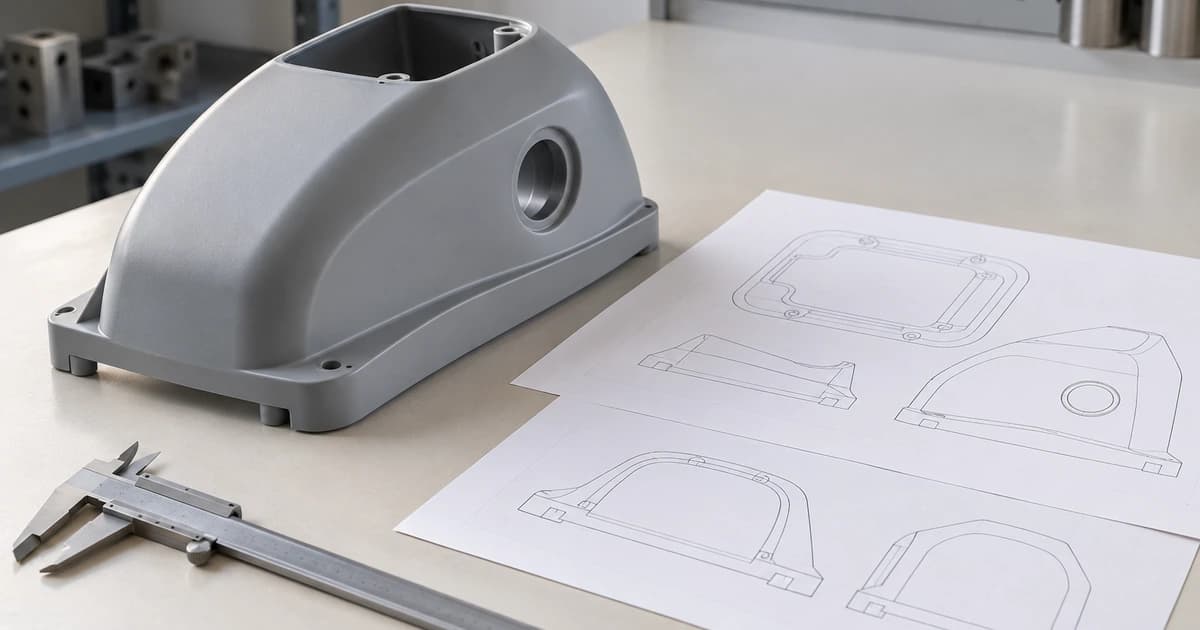
We commissioned line drawings rather than relying on photographs. Photographs carry surface detail, lighting and branding that can narrow or confuse the scope of what is claimed.
Six views were prepared, front, rear, both sides, and the upper and lower faces, with a perspective view added. Each was checked against the physical prototype with the design team present, because a drawing that does not match the article causes an objection at examination.
How is the correct class chosen for a design application?
By the article, not by the industry. Indian design classification follows the Locarno Classification, and the class governs what the registration covers.
A design is registered in respect of a specific article in a specific class. Getting that wrong is not a formality, because protection does not extend to articles outside the registered class in the way applicants often assume.
We identified the article precisely, checked it against the Locarno list, and confirmed the class before filing. Where a product could plausibly sit in two classes, the safer course is a separate application in each rather than an argument later.
How was the prior publication risk actually checked?
By auditing the client own channels first, because self publication is the most common cause of failure. We reviewed the company website, its marketplace listings, its social accounts and its distributor communications.
One risk appeared. A product photograph had been shared in a distributor group months earlier during a sales meeting. Whether a closed commercial group amounts to publication is arguable, and an argument is not what you want at examination.
We recorded the date and circumstances in the file, and moved quickly enough that the point was unlikely to be reached. We also searched the design registry and the market for similar existing articles, because third party publication defeats novelty just as effectively.
How was ownership settled with the tooling partner?
By a written assignment executed before filing. The tooling partner confirmed that any contribution to the appearance of the article vested in the client, for consideration already paid under the development agreement.
It took one meeting. The partner had no commercial interest in owning the design and had never considered that it might. Most such assignments are easy if they are asked for early and awkward if they are asked for after a dispute begins.
We then amended the standard development agreement so future projects would not need this step. That amendment is now in the client template for every external manufacturing engagement.
Would your development contracts survive an ownership challenge? Read our contract advisory work, or talk to TGC Legal.
Technologies and Tools Used
Design work is registry practice. The tools are the official systems and a disciplined document set.
Which official systems governed the filing?
The Office of the Controller General of Patents, Designs and Trade Marks administers design registration in India, with the Designs Wing at the Patent Office in Kolkata.
Filing is done electronically through the official portal, and the application status is tracked there. The published journal issued by the office records registrations once they proceed.
Classification follows the Locarno Classification published by the World Intellectual Property Organization. Checking the class against the WIPO list before filing avoids an objection that costs weeks to answer.
How were the representations prepared and controlled?
As dimensioned line drawings produced from the computer aided design model, then simplified for filing. The filing set carries no dimensions, no construction lines and no branding, because those are not part of the design claimed.
Each view was numbered and labelled, and the set was checked against the physical prototype in a single sitting with the design team. Two discrepancies were found and corrected at that stage.
We kept the working set and the filed set separately, with the filed set frozen and dated. If an objection arrives months later, you need to know exactly what was filed rather than what the current drawing shows.
What internal records mattered for the novelty position?
The disclosure log, which we built during the review. It records every occasion the design was shown outside the company, with the date, the audience and the material shared.
That log is now maintained as a routine on every new product. It costs a few minutes per entry and it is the only way to answer a novelty challenge with dates rather than recollection.
The design team also began keeping dated concept sketches in a single repository. Those establish origin, which matters if authorship is ever contested.
Implementation Process
From instruction to filing took eleven days. The registration process itself ran for several months afterwards, as it always does.
What happened in the first week?
Three things in parallel. The drawings were commissioned and produced. The feature by feature review separated appearance from function. And the assignment from the tooling partner was drafted and signed.
We also issued a hold instruction to marketing, in writing, listing exactly what could not be shown or sent. Verbal instructions do not survive a busy launch week.
That written hold turned out to matter. A distributor pack containing the product photograph had already been queued for despatch and was stopped because someone checked the list.
How long does design registration take in India?
The filing date is secured immediately on filing. Registration itself commonly takes several months, depending on whether the examiner raises objections.
Objections at this stage are usually formal. Representations that are unclear, views that do not correspond, a class that does not match the article, or a statement of novelty that claims too much.
Because the filing date is what protects the applicant, the later timeline is rarely commercially urgent. Launch can proceed once the application is on file, which is the point clients most often misunderstand.
What is a statement of novelty and why does it matter?
It is the short statement identifying what is new in the design, and it shapes the scope of protection. Claiming novelty in the shape and configuration as a whole is different from claiming it in a particular surface pattern.
We drafted it narrowly enough to be defensible and broadly enough to be useful. Overclaiming invites cancellation later, because a statement covering functional features hands an opponent a ready argument.
The wording went through three drafts. It is two sentences long, which is a reasonable indication of how much thought each sentence carried.
What happened at the launch itself?
It proceeded on schedule. The application had been filed and the number was on file, so the stand, the catalogue and the marketplace listings went ahead without restriction.
We asked marketing to include the standard notice that the design was the subject of an application. That is not a legal requirement and it has no effect on validity.
It has a practical effect on copiers, who tend to prefer targets that have not filed anything. Deterrence is cheaper than enforcement.
Need a hold instruction your marketing team will actually follow? Read more on our IP work, or reach TGC Legal.
Business Results
Outcomes are described qualitatively. Registry decisions and enforcement outcomes depend on the record and on official discretion, so figures would be invented.
The points below relate to this product and this filing. They are not a prediction for any other application.
What did the company secure?
A filing date preceding any public disclosure, on two applications covering the housing and its variant. That is the asset. Everything downstream depends on it.
Clean ownership as well, evidenced by a signed assignment rather than by an assumption about what the development agreement meant.
And a launch that happened on the announced date. The legal work cost eleven days of parallel effort and no commercial delay, which is the outcome a product team actually cares about.
The applications also gave the sales team something concrete for distributor conversations. A protected shape is a reason for a distributor to stock the line rather than a look alike.
How did the enforcement position change?
Substantially. Before filing, the only route against a copier was passing off, requiring proof that consumers associate the shape with the client. For a product months old that proof is very hard to assemble.
With registration, the test under Section 22 is whether the impugned article is a fraudulent or obvious imitation, judged by the eye. No survey evidence, no reputation to prove.
That difference decides whether a cease and desist letter is taken seriously. Most copying stops at the letter stage, and letters backed by a registration number carry weight that letters asserting reputation do not.
What changed in the product development process?
The filing decision moved to the start of tooling rather than the end of development. That is a scheduling change more than a legal one, and it removes the entire class of problem this matter presented.
A disclosure log is now kept for every new product, recording each external showing with its date and audience.
The development agreement template now vests design ownership in the client expressly. No future project will need a separate assignment negotiated under launch pressure.
None of these changes cost anything to run. They cost one project of discomfort to introduce, which is the usual price of a process that works.
What was avoided?
A permanently unregistrable design. Had the catalogue gone out a fortnight earlier, no filing would have cured it, because prior publication cannot be undone.
An ownership argument with a manufacturing partner the client depends on, conducted at the worst possible moment.
And a registration vulnerable to cancellation under Section 19 for overclaiming functional features, which the feature by feature review removed before filing rather than after a challenge.
The variant filing removed a fourth risk. A competitor copying the larger unit in the range would otherwise have sat outside the single registration entirely, which is the usual way a copier works around a design.
Is your next product still unpublished? Explore our intellectual property services, or speak with TGC Legal.
Lessons Learned
Two confirmations, one surprise, and one process change that has already paid for itself.
What worked better than expected?
The written hold instruction. We drafted it as a precaution and it caught a distributor pack that was already queued for despatch.
A verbal instruction during a launch week does not survive contact with a marketing calendar. A one page list of what cannot go out, circulated to named people, does.
It is now issued as standard on any filing where a launch is running in parallel, and it takes about ten minutes to prepare.
The list names people rather than departments. A hold addressed to marketing belongs to nobody, and a hold addressed to three named people belongs to three named people.
What was the unexpected discovery?
How much of the housing profile turned out to be functional. The design team had always described the shape as a styling decision.
Once we asked feature by feature why each curve existed, roughly a third of the profile had an airflow or moulding reason behind it. Those features could not carry the design claim.
That was uncomfortable in the moment and it produced a stronger application. A narrower claim that survives is worth more than a broad one that invites cancellation.
What was hardest during the process?
Persuading the client that the launch did not need to move. The instinct on receiving legal advice under time pressure is to postpone everything.
Postponement was unnecessary. Once the application is filed, disclosure is free. The only requirement was that nothing go public in the eleven days before filing.
Making that distinction clear took one meeting and a written note. Without the note, the launch would probably have slipped a month for no reason.
A postponed launch has costs nobody attributes to legal advice, because they appear as lost sales rather than as fees. Being precise about what actually needs to wait is part of the job.
What would we recommend to another manufacturer?
File before you show. That is the entire lesson and it is the one most often ignored, because product teams reasonably want feedback before committing to a shape.
Fix design ownership in the development contract, not by assignment afterwards. The clause is two lines and it is free at the time of signing.
And keep a disclosure log from the first concept sketch. When a novelty challenge arrives years later, the log is the difference between a dated answer and a recollection.
Reviewing your product development contracts this year? Read more on IP advisory, or get in touch with TGC Legal.
Frequently Asked Questions
What is design registration in India?
It is registration under the Designs Act 2000 of the shape, configuration, pattern, ornament or composition of lines or colours applied to an article and judged solely by the eye. It protects appearance rather than function, and it is administered by the Designs Wing of the Indian Patent Office.
How long does a registered design last?
Ten years from the date of registration, which relates back to the filing date. That term may be extended once by a further five years on application and payment of the prescribed fee. After fifteen years the design falls into the public domain and cannot be renewed again.
Does showing a product at a trade fair affect registration?
Yes, and usually fatally. Section 4 of the Designs Act 2000 prohibits registration of a design already disclosed to the public in India or abroad before the filing date. A trade stand, catalogue, marketplace listing or public social post can each amount to prior publication.
What cannot be registered as a design?
Modes or principles of construction, anything that is a mere mechanical device, features of shape dictated solely by the function the article performs, and matter that is properly the subject of a trade mark or an artistic work. Function belongs to patent law rather than to design law.
How do IP law firms in India choose the class for a design?
By identifying the article precisely and matching it to the Locarno Classification, which India follows. A design is registered for a specified article in a specified class, and protection does not extend across classes in the way applicants often assume. Two plausible classes usually means two applications.
What is a statement of novelty?
A short statement identifying what is new in the design, filed with the application. It shapes the scope of protection. Drafting it too broadly, particularly so that it covers functional features, hands an opponent an argument for cancellation under Section 19 at a later stage.
Who owns a design developed with a manufacturing partner?
Whatever the contract provides. Where the development agreement is silent, and the partner contributed to the appearance during manufacturability review, ownership becomes arguable. Settling it by written assignment before filing is straightforward. Settling it after a dispute has begun is not.
Can a design be protected without registration?
Only through passing off, which requires proving that consumers associate the shape with one trader. That standard is demanding and usually fails for a recently launched product. A registration replaces it with a test of fraudulent or obvious imitation judged by the eye.
How long does the registration process take?
The filing date is secured on filing, which is what protects the applicant commercially. Registration itself commonly takes several months, and longer if the examiner raises objections. Those objections are usually formal, concerning unclear representations, views that do not correspond to each other, or a class that does not match the article.
Can a registered design be cancelled?
Yes. Section 19 of the Designs Act 2000 allows cancellation on grounds including prior registration in India, prior publication anywhere, lack of novelty or originality, and the design not being registrable under the Act. Overclaiming in the statement of novelty is a common vulnerability.
Conclusion
IP law firms in India spend a good deal of time explaining a rule that sounds unfair the first time you hear it. Show the product, lose the design. There is no grace period, and prior publication cannot be undone by filing afterwards. On this file the catalogue was a fortnight from despatch, and that fortnight was the difference between a protectable shape and a shape anyone could copy. The work itself was unremarkable. Line drawings from six views, a feature by feature separation of appearance from function, an assignment from the tooling partner, a narrow statement of novelty, and two applications rather than one so the variant was covered too. Eleven days, and the launch never moved. Three habits prevent this problem entirely. File before you show. Put design ownership in the development contract rather than in a later assignment. And keep a dated disclosure log from the first concept sketch. If a new product shape is in tooling right now, write to TGC Legal before the photographs go out.
Sources
- Office of the Controller General of Patents, Designs and Trade Marks, Government of India
- Indian Kanoon, full text of the Designs Act 2000
- World Intellectual Property Organization, the Locarno Classification for industrial designs
- World Intellectual Property Organization, overview of industrial design protection
- Department for Promotion of Industry and Internal Trade, Ministry of Commerce and Industry
This case study is issued in public interest and for general information only. Client identity and commercially sensitive details are withheld. Outcomes are described qualitatively, without figures, because legal results depend on the evidence on record and on the discretion of the deciding authority. Nothing here is legal advice on any specific matter.
Share on Social Media
Similar Cases
Why a Kochi Technology Firm Asked an Employment Lawyer Near Me to Rebuild Its Exit Terms
How a Family Company Moved Shares After an Intestate Death, and Why Will Registration Would Have Helped
How IP Law Firms in India Approach Design Registration for a Kerala Consumer Product Launch
How a Dispute Litigation Lawyer Used Section 12A Mediation to Settle a Kochi Supply Contract Claim
How a Kerala High Court Lawyer Answered a Licence Refusal for a Manufacturer Through Article 226
How a Property Legal Opinion Rebuilt a Broken Title Chain for a Kochi Land Aggregation
How a Trademark Objection Reply Carried a Kochi Consumer Brand Through Examination and Opposition
How an Ernakulam Engineering Firm Built Trade Secret Protection Without a Dedicated Indian Statute
How Tax Litigation Lawyers Answered an Indirect Tax Demand for a Kerala Manufacturer
How a Kerala IT Company Rebuilt Its POSH Committee and Fixed a Broken Inquiry Timeline
How a Kochi Supplier Achieved MSME Delayed Payment Recovery Through the Facilitation Council
Kochi Property Advocate Prevents a Costly Real Estate Dispute Through Legal Due Diligence
Protecting a Software Company's Source Code with Copyright Attorneys
POSH Corporate Services: Transform Outdated POSH Policies into Compliant Frameworks
Structuring Multi-User Software Licensing Agreements for Enterprise Clients
Securing a SaaS Startup's Confidential Information Through a Non Disclosure Agreement