Case Study
Key Takeaways
- Article 226 of the Constitution lets a High Court issue writs to any authority for enforcing fundamental rights and for any other purpose.
- In S.P. Gupta v Union of India (1981), the Supreme Court relaxed standing for members of the public acting bona fide against public wrong or public injury.
- In State of Uttaranchal v Balwant Singh Chaufal (2010), the Supreme Court told courts to verify a petitioner's credentials, the correctness of the petition and the presence of substantial public interest before entertaining a PIL.
- In Municipal Council, Ratlam v Vardhichand (1980), the Supreme Court held that a municipality cannot evade its drainage duty by pleading financial inability.
- A dated record of unanswered representations often decides whether a civic grievance is heard as public interest litigation.
Table of Contents
- Executive Summary
- Client Overview
- Business Challenges
- Business Objectives
- Solution Strategy
- Technologies and Tools Used
- Implementation Process
- Business Results
- Lessons Learned
- Frequently Asked Questions
- Conclusion
Executive Summary
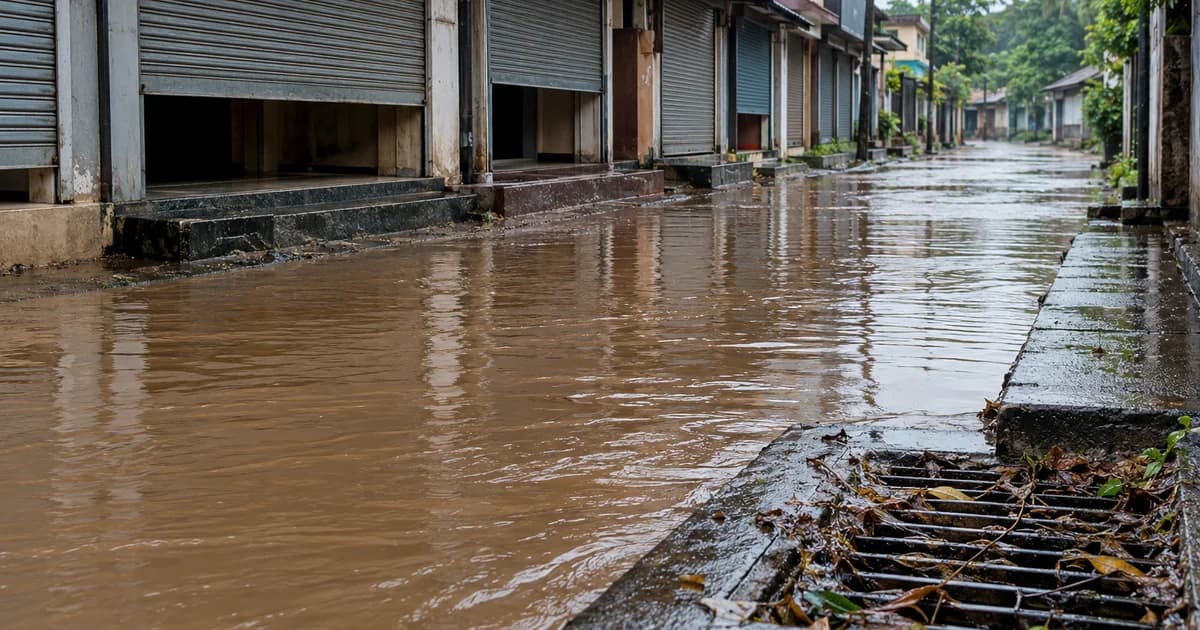
Most associations call litigation attorneys after the third flooded monsoon, not the first. This one had written to the local body for several seasons. Nothing moved. A public drain beside their street stayed choked, and every heavy rain pushed water into shops and nearby homes.
The client is a traders association on a busy commercial street in Kochi. Residents from the lanes behind the street joined the effort later.
Their question was simple. Could they take the local body to court? Our answer took longer, because the real question was a different one.
Was this genuine public interest litigation, or a private commercial grievance wearing public clothes? Courts look hard at that distinction. Get it wrong and the petition can fail at the threshold.
We tested the grievance against the Supreme Court's guidance on bona fides and standing. We rebuilt the record of every representation the association had made. Then we filed a writ petition under Article 226 before the High Court of Kerala.
The court issued notice and directed the authority to consider the pending representations and report what it had done. Desilting work followed before the next monsoon. That is a qualitative outcome, and it depended on the record and on the court.
Has your association written to a local body for seasons without an answer? Explore our public interest litigation service, or speak with the team via the contact page.
Client Overview
The client is a registered traders association representing small shops on one commercial street in Kochi. Members sell hardware, textiles, groceries and household goods.
Most members run family businesses. Few have staff beyond a handful of workers. None had ever been party to a High Court case.
The association meets monthly. It keeps minutes, collects a small subscription, and writes to authorities on shared issues. That habit of writing things down turned out to matter a great deal.
Behind the street sit residential lanes. Rainwater from those lanes drains toward the same public drain that runs along the shopfronts. When the drain chokes, water backs up in both directions.
A residents welfare association covering those lanes had its own complaints. The two bodies had never coordinated. Each had written separately, to different officers, at different times.
So the client brought us a mixed file. Letters, photographs on several phones, a few acknowledgement slips, and a strong sense of grievance. It also brought one fear, voiced at the first meeting: would the court see shopkeepers protecting their stock and nothing more?
Is your association's paper trail scattered across phones and drawers? Read more on documents to gather before filing a case, or contact TGC Legal.
Business Challenges
The flooding was the visible problem. The legal problems sat underneath it, and the first of them could have ended the case before it began.
When does a civic problem qualify as public interest litigation?
When the injury falls on the public, and the person moving court acts bona fide. The traders had a commercial stake. That alone does not disqualify them, but it invites scrutiny.
In State of Uttaranchal v Balwant Singh Chaufal, decided in 2010, the Supreme Court issued directions to preserve the purity of PIL. Courts should prima facie verify the petitioner's credentials. They should be satisfied that the petition's contents are correct. They should be fully satisfied that substantial public interest is involved.
The same directions ask courts to ensure there is no personal gain, private motive or oblique motive. Petitions by busybodies can attract costs.
So the first job was honest testing. Who else suffered when the drain choked? Pedestrians on a public road. Residents behind the street. Customers wading through stagnant water. That breadth is what made the grievance public.
Do you need locus standi to file a PIL in the High Court?
You need standing, but the rule is relaxed. In S.P. Gupta v Union of India, decided in 1981, the Supreme Court explained the shift.
Where a public authority's act or omission causes public wrong or public injury, any member of the public acting bona fide and having sufficient interest can seek redress. The strict rule requiring a specific legal injury gives way.
The court was equally clear about the limit. A mere busybody or meddlesome interloper does not qualify. A person acting for personal gain or private profit should be turned away at the threshold.
Here, standing was not really in doubt. The association's members were directly affected. The harder question was candour. Their own interest had to be disclosed plainly, not buried under public language.
Why had years of representations produced nothing?
Because they were scattered. Some went to a ward office, some to an engineering wing, one to an elected representative. Few were acknowledged in writing.
Several letters described the flooding without naming the drain, the stretch, or the specific failure. An officer reading one of them could not tell what work was being requested.
Nobody had sent a consolidated representation that set out the history and asked for a decision. Without that, there was no clear refusal to challenge and no clear inaction to point to.
Could the petition be dismissed as a private dispute?
Yes, if framed badly. A petition centred on damaged stock and lost trading days reads as a claim for private loss. Writ courts are not the forum for damages between a trader and a local body.
A petition centred on a public drain, a public road and a public health risk reads differently. The relief sought also matters. Asking the court to direct the authority to perform its statutory function is public relief. Asking for compensation to members is not.
We removed every claim for money from the draft. The association accepted this quickly once the reasons were explained.
Unsure whether your grievance is public or private in the eyes of a court? Read our writ petition support page, or ask TGC Legal.
Business Objectives
We agreed three objectives with the office bearers at the second meeting. We also ruled out two things they had assumed they wanted.
What did the association actually need from the court?
A working drain before the next monsoon. Not a judgment to frame. Not a finding of blame. Just a cleared drain and a body answerable for keeping it clear.
That shaped the relief. The petition sought a direction to the authority to consider the representations, inspect the stretch, and take steps under its statutory functions. It also sought a report to the court on what was done.
Relief framed this way is modest. It is also the kind a writ court can grant without stepping into engineering decisions. Courts are generally slow to dictate how an authority should do its work. They are more willing to direct that the work be considered and reported.
Why was a claim for compensation ruled out?
Because it would have turned a public petition into a private one. That shift invites the very objection the association feared most.
Compensation for flood damage raises disputed facts. Which stock, which day, what value, whose fault. Writ courts generally avoid adjudicating disputed questions of fact like these.
There was also a credibility point. A petition asking for a drain to be cleared reads as public spirited. Add a money claim and every line of it gets read again with suspicion.
When should a traders association call litigation attorneys?
Before the file becomes unrecoverable. In this matter, the most useful letters were the oldest ones, and two had nearly been thrown away.
An early call lets the record be built deliberately. Representations get sent to the right officer, in the right form, with acknowledgement. Photographs get dated and kept together.
There is a practical reason too. Writ courts can decline relief for delay. A long, unexplained gap between the injury and the petition weakens the case.
Ruled out alongside compensation was any personal attack on officers. The petition named offices, not individuals. That kept the focus on duty rather than on blame.
Planning what to ask a court for, before you ask? Read our notes on questions to ask before you instruct counsel, or write to TGC Legal.
Solution Strategy
The strategy was to make the public character of the grievance visible on the record before a single paragraph of the petition was drafted.
Every step served one of the Balwant Singh Chaufal tests. Credentials, correctness of contents, and substantial public interest. If the court asked any of those questions, the answer would already be in the file.
How do you prove bona fides in a public interest petition?
By disclosing interest, not hiding it. The petition stated plainly that the petitioners traded on the affected street and suffered loss. It then explained why the injury reached well beyond them.
We added the residents welfare association as a co petitioner. Its members had no commercial stake at all. Their complaint was water entering homes and standing in the lanes for days.
Both associations produced their registration details, their resolutions authorising the petition, and the minutes recording the decision. That answered the credentials question before the court could raise it.
Why was a fresh consolidated representation sent first?
Because the old letters were scattered and vague. A court asked to direct an authority to act on representations needs to see a clear, recent demand.
We drafted one representation from both associations. It identified the drain, the stretch, the history of flooding, and every earlier letter by date. It asked the authority to inspect and desilt before the monsoon.
It went to the authority's head office by registered post, with a copy delivered by hand for acknowledgement. We gave a reasonable period for a reply.
No reply came. That silence, on a clear and specific demand, became the centre of the petition. It is far stronger than years of unanswered complaints that never asked for anything precise.
Which legal duties anchored the petition?
The Kerala Municipality Act 1994 gives municipalities and municipal corporations control over drainage within their area. The petition described that function generally and sought its performance.
Article 226 supplied the jurisdiction. It lets every High Court issue directions, orders or writs, including mandamus, to any person or authority within its territory, for enforcing fundamental rights and for any other purpose.
The Supreme Court's decision in Municipal Council, Ratlam v Vardhichand, from 1980, gave the principle. A municipality cannot run away from its duty to provide working drainage by pleading financial inability.
We used Ratlam carefully. It arose from a criminal procedure remedy under Section 133 of the Code of Criminal Procedure, not a writ. Its value here was the principle on public health duties, not the procedure.
Should it be a PIL or an ordinary writ petition?
Both routes were open. The members were directly affected, so an ordinary writ seeking mandamus was available to them in their own right.
We chose the public interest route for three reasons. The harm was shared by people who were not petitioners. The relief sought benefited the whole stretch. And the residents' participation made the public character undeniable.
The trade off is scrutiny. A PIL is examined for motive in a way an ordinary writ is not. We accepted that because the record could withstand it.
Had the residents declined to join, we would likely have advised an ordinary writ. That decision depended on the facts, and on how the record looked.
Weighing a PIL against an ordinary writ? See how we handled a writ challenge to a licence refusal, or talk to TGC Legal.
Technologies and Tools Used
Nothing here was sophisticated. The tools were ordinary, and the discipline in using them was what counted.
How were the photographs and videos made usable as evidence?
Members had hundreds of images across their phones. Most had no context. A picture of water on a road does not show which road, which day, or which drain.
We asked for originals rather than forwarded copies, since forwarding can strip date information. Each kept image was logged with the date, the approximate time, the location on the stretch, and the person who took it.
We then selected a small set covering several monsoons. Each showed the same reference points, such as a fixed shopfront and the drain grating, so the court could compare like with like.
How was the representation history organised?
In a single chronological register. Date, sender, addressee, mode of delivery, acknowledgement, and any reply. Every letter in the file appears on it.
Building it took longer than drafting the petition. Some letters existed only as photographs of the office copy. Two acknowledgements had to be traced through members who had moved away.
The register did two jobs. It showed the court a long history of demands. It also showed us where the history was weak, which is why the fresh consolidated representation was sent.
What official records supported the petition?
Rainfall information from public weather records, used only to show that the flooding coincided with ordinary monsoon spells rather than exceptional events.
A simple sketch of the stretch, showing the drain, the slope from the residential lanes, and the points where water collected. It was hand drawn and clearly labelled as illustrative.
Copies of earlier acknowledgement slips and the registered post receipts for the consolidated representation.
We avoided any technical opinion we could not stand behind. No engineering conclusions about why the drain choked. The petition said it was choked, showed it, and asked for it to be cleared.
Implementation Process
The matter ran from the first meeting to the court's direction across several months, timed so that relief could arrive before the monsoon.
What happened before the petition was filed?
We met both associations separately, then together. Each passed a resolution authorising the petition and naming a representative to sign the affidavit.
The register was built and the photographs were logged. The fresh consolidated representation went out. While the reply period ran, we drafted.
We also checked whether any other proceeding on the same drain was pending anywhere. A parallel case would have complicated everything. There was none.
One office bearer asked whether a news story would help. We advised against it. Public pressure can be useful elsewhere, but a petition should stand on its record, not on coverage.
How is a PIL drafted for the Kerala High Court?
Short, factual and annexed. The petition opened with who the petitioners were and why they were before the court, including their own interest.
It then set out the public injury, the statutory function of the authority, the history of representations, and the silence on the last one. Each fact pointed to an annexure.
The grounds were brief. Article 226 for jurisdiction. The relaxed standing rule from S.P. Gupta. The public health principle from Ratlam. A plain statement that the petition met the Balwant Singh Chaufal tests.
What happened at the first hearing?
The court examined the bona fides question early. The disclosures in the petition answered most of it. The residents' participation answered the rest.
Notice was issued to the respondent authority. Its counsel sought time to obtain instructions, which is normal at that stage.
Before the next date, officials inspected the stretch. That inspection was the first real movement on the drain in several seasons. It came because a court date was approaching.
We advised the association to record the inspection with dated photographs. If the authority later relied on it, the court should see the same stretch from both sides.
How did the authority respond to the petition?
Through a statement placing on record the steps it proposed. It accepted that the drain needed attention and outlined desilting work.
The court directed the authority to consider the pending representations and file a report on the action taken. It kept the matter on its file to receive that report.
Desilting work followed. The association monitored it and logged photographs again. When the report was filed, the record on both sides matched.
The matter was then closed on that report, with liberty to the petitioners to approach the court again if the problem recurred. That liberty matters. It keeps the authority's commitment answerable.
Is a court date the only thing that moves your local body? Explore our public interest litigation service, or reach TGC Legal.
Business Results
Outcomes are described qualitatively. The court's direction depended on this record and this bench, so no figure attached to it would be honest.
These observations relate to this petition and this stretch. They are not a forecast for any other civic grievance.
What changed on the street?
The drain was desilted before the following monsoon. Members reported that water cleared from the road far faster than in earlier seasons.
Residents in the lanes behind reported the same. Water that once stood for days drained away after ordinary rain.
We are careful with that observation. One season is one season. Drains choke again, and the real test is whether maintenance continues.
The association now inspects the stretch itself before each monsoon. If the drain looks blocked, it writes immediately, citing the court's order and the authority's report.
What did the authority commit to on record?
Inspection, desilting, and a report to the court. Those commitments are now part of a judicial record rather than a verbal assurance at a ward office.
That shift is the most durable outcome of the case. A future representation can point to the report and ask why the steps described there have lapsed.
The liberty granted on closure supports it. The petitioners may approach the court again if the problem recurs, and they would not be starting from nothing.
This is also why the petition named offices rather than officers. Postings change. The office that gave the commitment remains answerable.
How did the association itself change?
It now keeps a representation register as a standing practice. Every letter is logged, every acknowledgement filed, every reply noted.
It coordinates with the residents welfare association. The two bodies send joint letters on shared issues, which carry more weight and are harder to dismiss as commercial lobbying.
Office bearers also understand what a court will and will not do. That has saved them from considering litigation on issues where it would not help.
Members who doubted the case at the start were the most engaged by the end. Watching a register turn into a court record made the process real for them.
What risks were avoided?
Dismissal at the threshold as a private dispute. That was the central risk, and the framing, disclosure and co petitioners addressed it.
Costs for a frivolous petition. Balwant Singh Chaufal allows courts to impose costs on petitions filed for extraneous motives. A candid, well documented petition carries little of that risk.
A diluted petition. A money claim would have invited disputed facts and diverted the court from the drain.
And a damaged relationship with the authority. The petition criticised inaction, not people. Officials engaged with the process rather than defending themselves against personal allegations, which made compliance easier.
Does your association have a record a court could act on? Explore writ petition support, or speak with TGC Legal.
Lessons Learned
Two of these change how we open every civic grievance file. The others confirmed what the Supreme Court has already said plainly.
What worked better than expected?
Disclosing the traders' commercial interest on the first page. We expected the office bearers to resist. They welcomed it, because it removed the thing they feared being caught out on.
Candour also changed how the court approached the petition. A petitioner who names their own stake invites less suspicion than one who leaves the court to find it.
The joint petition with residents worked better than planned. It answered the public interest question more clearly than any paragraph of argument could.
What was the unexpected discovery?
That years of representations contained almost no clear demand. The association believed it had asked repeatedly. It had complained repeatedly, which is different.
The fresh consolidated representation took one afternoon to draft. It did more for the petition than all the earlier letters put together.
We now draft a single, specific, dated demand at the start of any matter against a public authority. Without one, there is no clear default to put before a court.
It is also the step associations can take themselves. Name the asset. Name the failure. Ask for a decision. Keep the acknowledgement.
What was hardest during the process?
Persuading the association to drop the compensation claim. Members had lost stock and trading days. Asking them to leave that out of the petition felt to some like abandoning their own case.
The argument that won was practical. A petition for compensation might fail entirely. A petition for a cleared drain could succeed, and a cleared drain prevents the next loss.
One member chose a separate route for his own loss. That was his right, and keeping it separate protected the public petition.
What would we recommend to another association?
Keep a register of every representation from the first letter. Date, addressee, mode, acknowledgement, reply. It costs nothing and it is the backbone of any later petition.
Write one clear demand before you think about court. Identify the asset, the failure and the action requested, and send it so that receipt can be proved.
Find out who else is affected and work with them. A shared grievance raised jointly is harder to dismiss and easier for a court to treat as public.
And speak to litigation attorneys before the record is lost, not after. The oldest letters were the most valuable here, and two of them nearly went in the bin.
Want a second view on a civic grievance before it goes further? Read more on our public interest litigation service, or get in touch with TGC Legal.
Frequently Asked Questions
What is public interest litigation in India?
It is litigation brought to redress a public wrong or public injury, often by a person or body acting for the public rather than only for themselves. Courts relaxed the strict standing rule for such cases, but they still require the petitioner to act bona fide and the petition to involve substantial public interest, as the Supreme Court has emphasised.
Can a traders association file a PIL?
It can, provided the grievance affects the public and the association acts bona fide. Members' own commercial interest should be disclosed plainly. Joining residents or other affected groups strengthens the public character of the petition, and seeking a direction to an authority rather than compensation keeps the petition public in substance.
Under which article is a PIL filed in the High Court?
A PIL in a High Court is filed as a writ petition under Article 226 of the Constitution. Article 226 lets every High Court issue directions, orders or writs, including mandamus, to any person or authority within its territory, for enforcing fundamental rights and for any other purpose.
What did Balwant Singh Chaufal decide about PILs?
In State of Uttaranchal v Balwant Singh Chaufal (2010), the Supreme Court directed courts to verify the petitioner's credentials, be satisfied about the correctness of the petition's contents, and be fully satisfied that substantial public interest is involved. It also asked High Courts to frame PIL rules and allowed costs against frivolous petitions.
What is locus standi in a public interest case?
Locus standi is the right to bring a case. In S.P. Gupta v Union of India (1981), the Supreme Court held that any member of the public acting bona fide and having sufficient interest can seek redress for public wrong or injury. A busybody or meddlesome interloper does not qualify.
Can a municipality refuse drain work for lack of funds?
In Municipal Council, Ratlam v Vardhichand (1980), the Supreme Court held that a municipal council cannot run away from its duty to provide working drainage by pleading financial inability. How that principle applies to a particular authority and drain depends on the facts and the governing statute.
Should representations be made before filing a PIL?
Yes, in most civic matters. A clear, specific and dated representation to the authority shows the court what was asked and what was not done. Scattered complaints without a precise demand make it harder to show a default. Keep proof of delivery and any acknowledgement for the record.
Can compensation be claimed in a drainage PIL?
It may be raised, but it usually weakens a public petition. Compensation involves disputed facts about loss and fault, which writ courts generally avoid deciding. Seeking a direction that the authority perform its function keeps the focus public. Individual losses can be pursued separately through the appropriate remedy.
What evidence supports a waterlogging petition?
A chronological register of representations, dated original photographs from fixed reference points across several seasons, acknowledgements and postal receipts, a simple labelled sketch of the stretch, and public weather records showing ordinary rainfall. Avoid technical conclusions you cannot support. Show the condition and ask for it to be addressed.
What happens after a court directs an authority to act?
The authority usually reports the action taken. The court may close the matter on that report, sometimes with liberty to return if the problem recurs. Petitioners should monitor the work, keep dated records, and cite the order in any later representation. Outcomes always depend on the record and the court.
Conclusion
Associations that look for litigation attorneys usually want to know whether they can sue. The more useful question is whether a court will see their grievance as public. In this Kochi matter, the answer was yes, but only after the record was rebuilt to show it. The traders disclosed their own interest. Residents joined as co petitioners. A single clear representation replaced years of scattered complaints, and its unanswered silence became the centre of the petition. Article 226 gave the High Court of Kerala jurisdiction. S.P. Gupta supplied the relaxed standing rule. Balwant Singh Chaufal set the tests the petition had to meet, and Ratlam gave the public health principle on drainage. The court directed the authority to consider the representations and report, desilting followed, and the matter closed with liberty to return. That outcome depended on this record and this court, and no other matter should assume it. Three steps are worth taking now. Keep a register of every representation. Send one clear demand before thinking about court. Find out who else is affected and work with them. If your association faces a recurring civic failure, speak with the team via the contact page.
Sources
- Indian Kanoon, Article 226 of the Constitution of India
- Indian Kanoon, S.P. Gupta against President of India and others, Supreme Court of India, 1981
- Indian Kanoon, State of Uttaranchal against Balwant Singh Chaufal and others, Supreme Court of India, 2010
- Indian Kanoon, Municipal Council, Ratlam against Shri Vardhichand and others, Supreme Court of India, 1980
- Local Self Government Department, Government of Kerala
This case study is issued in public interest and for general information only. Client identity and commercially sensitive details are withheld. Outcomes are described qualitatively, without figures, because legal results depend on the evidence on record and on the discretion of the deciding authority. Nothing here is legal advice on any specific matter.
Share on Social Media
Similar Cases
How an International Arbitration Lawyer Answered a Foreign Award Enforcement Against a Kerala Seafood Exporter
How Copyright Infringement Attorneys Stopped a Builder Reusing a Kochi Architect's Drawings Before Construction
How Deed Registration of a Conditional Gift Protected an Elderly Kerala Parent's Right to Maintenance
How a Business Contract Lawyer Rebuilt a Bengaluru Facility Services Agreement for the Labour Codes
How a Data Privacy Advisory Service Prepared a Kochi EdTech for DPDP Children's Data Rules
How Litigation Attorneys Framed a Kochi Traders Association Drainage Complaint as Public Interest Litigation
Why a Kochi Technology Firm Asked an Employment Lawyer Near Me to Rebuild Its Exit Terms
How a Family Company Moved Shares After an Intestate Death, and Why Will Registration Would Have Helped
How IP Law Firms in India Approach Design Registration for a Kerala Consumer Product Launch
How a Dispute Litigation Lawyer Used Section 12A Mediation to Settle a Kochi Supply Contract Claim
How a Kerala High Court Lawyer Answered a Licence Refusal for a Manufacturer Through Article 226
How a Property Legal Opinion Rebuilt a Broken Title Chain for a Kochi Land Aggregation
How a Trademark Objection Reply Carried a Kochi Consumer Brand Through Examination and Opposition
How an Ernakulam Engineering Firm Built Trade Secret Protection Without a Dedicated Indian Statute
How Tax Litigation Lawyers Answered an Indirect Tax Demand for a Kerala Manufacturer
How a Kerala IT Company Rebuilt Its POSH Committee and Fixed a Broken Inquiry Timeline
How a Kochi Supplier Achieved MSME Delayed Payment Recovery Through the Facilitation Council
Kochi Property Advocate Prevents a Costly Real Estate Dispute Through Legal Due Diligence
Protecting a Software Company's Source Code with Copyright Attorneys
POSH Corporate Services: Transform Outdated POSH Policies into Compliant Frameworks
Structuring Multi-User Software Licensing Agreements for Enterprise Clients
Securing a SaaS Startup's Confidential Information Through a Non Disclosure Agreement