Case Study
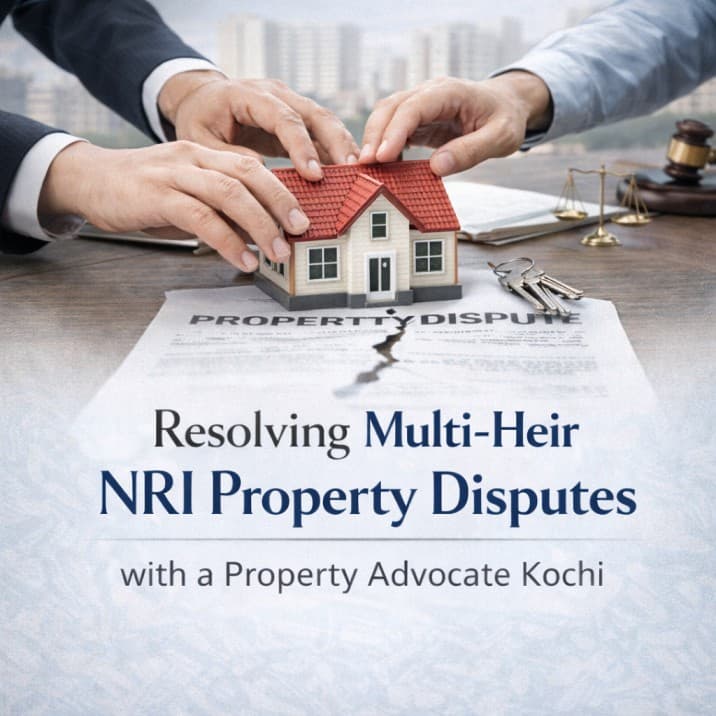
Property advocate support often becomes critical when a family inheritance turns into a dispute. Disputes of this kind are increasingly common where some heirs live in Kerala, and others reside abroad as NRIs. Cross-border documentation, conflicting expectations, and unclear title records often complicate succession. This is confirmed by the Ministry of External Affairs' official guidance on inheritance of immovable property by NRIs.
Introduction
This case study examines a Kerala-based ancestral property dispute involving several heirs, some resident and some NRI. The matter needed structured legal intervention. A property advocate in Kochi helped the family arrive at a documented, enforceable resolution.
Case Overview
The matter involved an ancestral residential property in Kochi. It was jointly inherited by four siblings under succession law. Two siblings were based in the Gulf and the United Kingdom.
The resident siblings, guided earlier by a general real estate lawyer in Kochi, began updating the registration in their names. This was done without written consent from the NRI co-heirs.
When this came to light, the NRI siblings obtained an independent property legal opinion. It flagged gaps in the chain of title and inconsistencies in revenue records.
Given the cross-border dispute and risk of unilateral transfer, they engaged a property advocate in Kochi. This ensured protection of their rights and due process.
Impact: Family Dispute Over Multi-Heir Property
When heirs are abroad, lack of property advocate advice can escalate succession matters. This often turns a manageable inheritance into a prolonged dispute.
Financial and Procedural Delays in Property Registration
The dispute stalled all dealings with the property, as no registration could proceed without consent from all four heirs. Property taxes accumulated, and upkeep was neglected during the delay. Without an early property legal opinion, the required consents were unclear. Ownership gaps are often identified only after disputes become formal.
A property registration lawyer later confirmed that mutation records needed correction. This was required before any transfer could proceed.
Conflicting Claims and Communication Breakdown Among Heirs
Disagreement over property division created tension beyond the legal issue itself. The resident siblings asserted control over the day-to-day management of the asset. The NRI siblings raised concerns about being excluded due to distance. Communication among the heirs deteriorated significantly, with each side relying on separate informal advice.
Risk of Fraudulent Transfer Without Full Heir Consent
The primary concern was the risk of a transfer being registered without the consent of all legal heirs. This risk is heightened where documentation is incomplete or contested. Even if successfully challenged, reversing such a registration may require years of civil litigation. This is necessary to restore lawful ownership shares.
In such situations, timely legal intervention becomes critical to prevent irreversible complications.
Complications from Cross-Border Documentation for NRI Heirs
For the NRI heirs, the dispute added complexity around powers of attorney. It also involved document attestation and remote verification of property records. A real estate lawyer in Kochi familiar with NRI client needs was essential to bridge this gap. This is where a dedicated NRI property lawyer in Kochi helps prevent costly procedural errors. Standard succession processes often fail to account for heirs who cannot appear in person.
Solution Offered by TGC Legal
Verifying Title Through a Detailed Property Legal Opinion
The property advocate began with a comprehensive review of title documents spanning 30 years. This included revenue records, prior registrations, and mutation entries. A detailed property legal opinion was then issued. It confirmed the chain of ownership and the lawful shares of all heirs.
It also identified inconsistencies in the mutation register. These required correction before any transfer could proceed.
Property Litigators for Partition Strategy
To formalise each heir’s entitlement, the property advocate worked with property litigators to prepare a partition suit. This was done as a protective legal measure. This also provided a clear legal framework if settlement discussions did not succeed.
Filing the suit brought the matter on record before the court. This ensures that no unilateral transfer could be effected while the proceedings were pending.
Drafting a Family Settlement Deed Among All Heirs
With the title position clarified, the property advocate facilitated a family settlement deed instead of a partition trial. All four heirs, including those abroad, reviewed and approved the draft before execution.
Coordinating Power of Attorney for NRI Heirs
Since two heirs could not travel to Kochi, the NRI property lawyer in Kochi arranged notarised and consular-attested powers of attorney. This enabled remote execution of formalities.
The property advocate ensured compliance with stamp duty and registration norms. This also enabled execution without the NRI heirs being physically present.
Result: Outcome Achieved Through Property Advocate Intervention
Resolution Timeline and Settlement Outcome
Within a few months of the property advocate’s involvement, the family settlement deed was finalised and registered. Each heir’s share was clearly recorded in line with the original property legal opinion.
The earlier registration attempt, made without NRI consent, was formally withdrawn before reaching court. The settlement deed also relied on the legal opinion on property as its evidentiary basis.
This documented position helped establish a clear title for future transactions with banks and buyers.
Clean Title Secured Through Proper Registration
A property registration lawyer confirmed that mutation, encumbrance, and tax records were duly updated. This reflected the revised ownership structure. The NRI property lawyer in Kochi team ensured clear communication across time zones throughout the process.
Conclusion
Multi-heir property disputes extend beyond documentation issues. They affect long-standing family relationships. Early engagement of a property advocate prevents escalation into litigation.
Support includes property litigators, an NRI property lawyer in Kochi, and a real estate lawyer in Kochi. A legal opinion on property and proper registration ensure clarity and enforceability. This TGC Legal case study shows how structured legal intervention resolves complex inheritance disputes.
Frequently Asked Questions
- When should I consult a property advocate in Kochi for inheritance disputes?
You should consult a property advocate in Kochi at the earliest sign of disagreement among heirs. Early legal advice helps prevent escalation and ensures proper documentation. - How does a property advocate in Kochi help in multi-heir property disputes?
A property advocate in Kochi reviews title records, clarifies legal shares, and ensures proper succession steps. They also coordinate settlement or litigation where required. - What causes disputes in multi-heir property cases?
Disputes often arise due to unclear title records, lack of consent among heirs, and miscommunication. Cross-border involvement of NRI heirs can further complicate matters. - Why is a property legal opinion important in inheritance cases?
A property legal opinion confirms ownership history and identifies gaps in documentation. It ensures clarity before any transfer or settlement. - What role does a property registration lawyer play?
A property registration lawyer ensures mutation, encumbrance, and tax records are correctly updated. This is essential for a valid and enforceable transfer. - How are NRI property disputes handled in Kerala?
NRI property disputes require coordination for powers of attorney, document attestation, and remote verification. An NRI property lawyer in Kochi ensures compliance with these requirements. - Can a family settlement deed avoid litigation?
Yes, a family settlement deed helps resolve disputes without court proceedings. It formalises agreed shares among all heirs. - What happens if one heir attempts a transfer without consent?
Such a transfer can be challenged legally and may be set aside. However, it often leads to prolonged civil litigation to restore ownership rights. - Why is early legal intervention important in property disputes?
Early intervention prevents procedural errors, protects ownership rights, and avoids long litigation. It also helps maintain family consensus. - What is the benefit of structured legal support in inheritance cases?
Structured legal support ensures clear documentation, enforceable agreements, and reduced risk of disputes. It creates a legally secure path to resolution.
Share on Social Media
Similar Cases
Resolving Multi-Heir NRI Property Disputes with a Property Advocate Kochi
Navigating RERA Delays in NRI Property cRegistrations for Registration of Flats Kochi
Business Tenancy Agreement Kerala: Premature Exit Dispute Commercial Lease
NRI Property Lawyer: Eviction and Possession Recovery of NRI Property
Commercial Rental Agreement: Lease Escalation Dispute in Kerala Retail Mall
Property Title Dispute Case Study: Securing High Court Relief with Litigation Attorneys
Property Lawyer Intervention to Secure Valid Property Documentation in Kerala
Property Lawyer: Facilitating NRI Residential Property Transfer in Thiruvananthapuram
Strategic Commercial Eviction Optimization for Retail Property SMEs
Managing Multi-Tenant Conflicts in a Co-Working Space: A Property Lawyer’s Case Study
Tenant Modifying Industrial Premises Without Consent: A Case Study for Real Estate Business Lawyer