Case Study
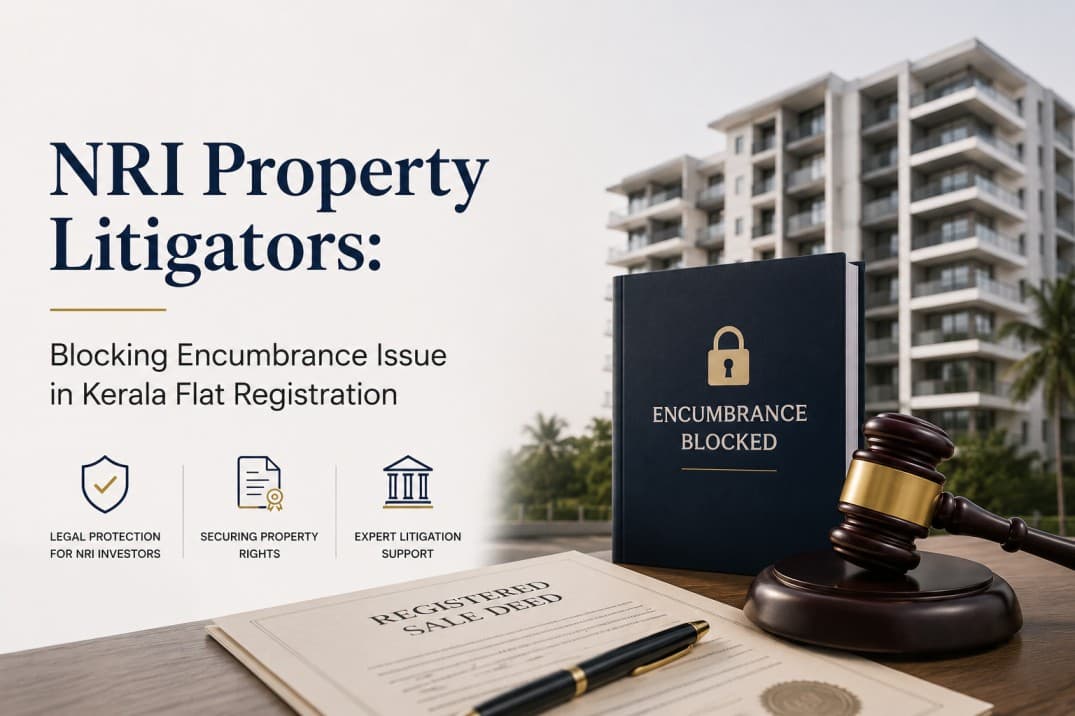
Property Litigators become essential when real estate projects fail to deliver on time, especially in high-value NRI property disputes. Delays in possession can quickly turn a secured investment into a legal and financial dispute.
In this case, an NRI investor based in the United Kingdom invested in a premium waterfront apartment project in Kochi. The project was promoted as a time-bound luxury development with clear contractual delivery commitments.
The client completed all payments and executed the agreement for sale. However, the developer failed to deliver possession within the agreed timeline. The delay went beyond the contractual grace period and disrupted the client’s financial and personal planning.
This situation required immediate legal intervention to enforce contractual obligations and address non-compliance under real estate law. It also required a structured legal assessment through property dispute attorneys.
Case Overview
Background of the Property Transaction
Our client, an NRI investor with long-term plans in Kerala, purchased a luxury apartment in Kochi. The purchase was based on assurances supported by a registered sale deed executed by the developer. The property documents initially indicated a clear and marketable title backed by project approvals.
The transaction was also expected to be free from disputes based on a preliminary encumbrance search conducted at the time of booking.
Agreement for Sale and Payment Completion
The client executed the agreement and complied with all payment milestones. However, inconsistencies emerged in the property documents, affecting confidence in the transaction structure. The developer’s representations were also expected to align with the property registry records maintained by authorities.
Registry & Compliance Concerns
Property Litigators identified inconsistencies between submitted property documents and historical entries. This was reflected in the property registry, raising compliance concerns. These gaps also affected validation processes required for stamp registration, delaying final approval of the transaction.
Delay in Possession and Builder Non-Compliance
Failure to Deliver Project Within Timeline
Despite multiple extensions, the developer failed to complete construction and hand over possession. This was confirmed during the initial encumbrance search conducted at the time of purchase. The project remained incomplete beyond the contractual deadline, triggering a legal breach. This prolonged delay indicated systematic non-compliance rather than a one-time construction setback.
Lack of Communication and Transparency
Repeated requests for updates from our client were met with vague responses and non-committal assurances. It further escalated contractual uncertainty and financial exposure. The absence of transparent reporting further weakened buyer confidence and indicated potential project mismanagement.
Legal Breach and Regulatory Concerns
Property Litigators identified that the delay potentially violated statutory obligations under real estate regulatory frameworks. This includes inconsistencies in the property registry records. It also raised concerns regarding compliance with mandatory timelines for project delivery and buyer protection. This created exposure to enforceable penalties and potential regulatory action against the developer.
Financial and Emotional Hardship to the Buyer
The delay resulted in continued rental expenses for our client abroad. It also blocked expected occupancy and delayed anticipated investment returns from the property. The prolonged uncertainty also caused significant planning disruption for long-term relocation plans.
Impact: Financial Loss and Legal Exposure
Financial Burden Due to Project Delay
The client faced a dual financial burden. This included continued rental payments abroad as well as EMI obligations linked to the home loan sanctioned for the project. This also created unsustainable cash flow pressure affecting broader investment planning.
Disruption to Investment Value
The delay affected projected rental income and long-term asset appreciation expectations tied to the Kerala real estate market. Market volatility further amplified the financial impact of delayed possession.
Legal and Contractual Risk Exposure
Uncertain Possession Rights
The absence of possession raised concerns regarding the enforceability of contractual rights. It also created the risk of potential renegotiation attempts by the developer. This created ambiguity regarding the legal remedies available without formal litigation.
Escalation of Project Default Risk
Property litigators assessed a risk of partial project abandonment or indefinite delay without legal intervention. Such risk classification required immediate escalation to preserve buyer rights. It also necessitated urgent legal monitoring to prevent further deterioration of the project timeline.
Solution: Legal Action by Property Litigators
Strategic Enforcement of Buyer Rights
TGC Legal issued a formal legal notice to the developer. It declared contractual default and demanded immediate possession or compensation. The notice also outlined statutory violations to strengthen legal enforceability.
Documentation of Breach Evidence
All communication records, payment proofs, contractual clauses, and the registered sale deed were compiled as evidence. These documents helped establish the developer’s breach clearly. This formed the foundation for regulatory and judicial proceedings. It also ensured a structured evidentiary record to support enforceability before the appropriate authorities.
Regulatory Complaint and Recovery Strategy
Regulatory Complaint Initiation
A formal complaint was filed before the relevant regulatory authority seeking enforcement of possession rights and a penalty for delay. The complaint also requested time-bound monitoring of project completion and verification of stamp registration compliance. It further emphasized continuous oversight to ensure compliance with statutory delivery obligations.
Compensation and Interest Claims
TGC Legal structured claims for delay compensation, including investment interest. They also included reimbursement of financial losses incurred by our client. This ensured that financial restitution was pursued alongside possession rights. It further strengthened the client’s position for full legal recovery.
Negotiation and Settlement Framework
Settlement Negotiation Framework
Parallel negotiations were initiated with the developer to explore expedited possession or financial settlement options. This dual-track approach ensured legal pressure was maintained while exploring resolution pathways. It also helped preserve leverage for securing a more favourable outcome for the client.
Protective Legal Safeguards
Settlement discussions were conducted with strict legal safeguards. This ensured that our client’s rights were not waived without full compensation. All proposals were reviewed for enforceability before client consent.
Outcome: Resolution and Buyer Protection
Enforcement of Possession Rights
Following legal pressure, the developer agreed to complete pending works and hand over possession within a revised binding timeline. This agreement was recorded to ensure enforceability in case of further default. It also created a clear obligation framework to prevent further deviation from the agreed schedule.
Regulatory Compliance Commitment
The developer also committed to compliance reporting and completion certification under regulatory oversight. This added a layer of accountability to the revised delivery schedule. It also ensured ongoing monitoring of project progress until completion.
Financial Compensation and Relief
Our client received compensation for the possession delay, including partial reimbursement and financial relief adjustments. This significantly eased the overall financial burden.
The negotiated settlement reduced ongoing financial exposure and stabilized the investment outcome. It also restored financial planning predictability for the client. It further ensured immediate financial relief aligned with contractual entitlements.
Final Possession and Legal Closure
The apartment was successfully handed over to our client after completion of pending construction obligations. The possession was documented with formal completion certificates.
The matter was closed with formal legal documentation ensuring no further liability or dispute risk for our client. It also ensured long-term legal protection against future claims.
Conclusion:
This case highlights the importance of property litigators in resolving builder delay and possession disputes. These matters require structured legal action, clear documentation, and timely regulatory enforcement.
Through a focused legal strategy by TGC Legal, the NRI client secured possession and compensation despite significant delays. The outcome reinforces the role of a property legal advisor in protecting buyer rights in cross-border real estate disputes. It also highlights the importance of timely legal intervention in preventing long-term financial loss.
FAQ
- What role do Property Litigators play in builder delay disputes?
Property Litigators help enforce buyer rights when developers delay possession or breach contracts. They use legal notices, regulatory complaints, and negotiation strategies to secure relief for clients.
- How do Property Litigators assist NRI buyers in property disputes?
Property Litigators support NRI investors by handling documentation, filing complaints, and ensuring enforcement of agreements. They protect buyers from financial loss and contractual violations.
- What is an encumbrance search in property transactions?
An encumbrance search verifies whether a property has any legal dues, claims, or liabilities. It helps ensure a clear title before or during a real estate transaction.
- Why is the property registry important in real estate cases?
The property registry maintains official ownership records. Any mismatch in the property registry can delay transactions and create legal disputes over ownership.
- What is the importance of property documents in builder disputes?
Property documents establish ownership, payment history, and contractual obligations. Incomplete or inconsistent documents can weaken legal claims and delay resolution.
- How does a registered sale deed impact ownership rights?
A registered sale deed legally confirms property ownership transfer. It is essential for enforcing rights in case of disputes or developer non-compliance.
- What is stamp registration in property transactions?
Stamp registration is the legal process that validates property transfer under the law. Without proper stamp registration, ownership rights may not be fully enforceable.
- What legal action can property litigators take in delayed possession cases?
They can issue legal notices, file complaints before authorities, and demand compensation or possession through structured legal proceedings.
- How does an encumbrance search help prevent property disputes?
An encumbrance search helps identify hidden liabilities or ownership issues early. This reduces the risk of future disputes or legal complications.
- Why is legal intervention important in property registry disputes?
Legal intervention ensures errors in the property registry are corrected, and ownership chains are properly validated. This prevents long-term disputes and financial loss.
Share on Social Media
Similar Cases
Dispute Litigation Lawyer Resolutions in Kochi | IT Commercial Contract Disputes Case Study
Earn-Out and Indemnity Disputes in M&A Transactions with an SPA Lawyer in Kochi
Confidentiality Protection in IT Services Disputes Through a Standard NDA
Corporate Resolution of Transfer Pricing Disputes with Tax Litigation Lawyers
Minority Shareholder Oppression in Private Equity Transactions with Corporate Lawyer
Litigation Lawyer for Kochi: NRI Contract Breach in Kerala Service Agreement
NRI Property Litigators: Blocking Encumbrance Issue in Kerala Flat Registration
Kochi Property Dispute Attorneys Help Resolve Apartment Ownership Conflicts
SaaS License Management: Resolving FinTech Software License Dispute
Property Dispute Attorneys: Reclaiming NRI-Owned Apartment in kerala
Commercial Rental Agreement : Safeguarding Retail Tenant Lease Rights
Corporate Lawyer: Structuring Cross-Border Acquisition for Logistics Company
IP Law Firm in India: A Case Study on Stopping Counterfeit Products
SPA Gap Analysis for a High Value Transaction in Kochi | SPA legal advisor near Kochi
Will registration in Kerala under a property legal advisor guidance| expert insights
Stamp Duty and Registration Fees Dispute Resolution for Corporates in Kerala
Intellectual Property Ownership Structuring for a Technology-Driven Indian Company | IP Law Firm India
Corporate Lawyer Advisory for Strengthening SaaS Data Governance and Compliance
Drafting a Software Development Agreement for a Kochi-Based SaaS Startup
Securing Microbrewery Business Licenses in Wayanad: Navigating Regulatory Requirements
Technology lawyers | Negotiating Limitation of Liability Terms in Ernakulam Fintech IT Services Contracts
Structuring Healthcare SaaS Licenses for Kerala Hospitals: Usage Rights & Compliance
SPA lawyer in Kochi| Crafting Indemnity Provisions in Manufacturing Joint Venture
Hybrid SaaS Development & Licensing Agreement for Logistics Providers
Two-Tier NDA Architecture for Fintech Partnerships | TGC Legal Kochi
Consumer Protection Law Case Study: Combating False Advertising with Legal Consultancy Services in Kochi
Navigating Employment Law: A Case Study on Workplace Harassment Claims with Posh Lawyers Kochi
Intellectual Property Disputes in the Tech Industry: A Landmark Case Study
The Impact of GDPR Enforcement: A Case Study on Data Breach Penalties and the Role of Litigation Attorneys in Kerala
Structuring Real Estate Transactions for IT Infrastructure in Kochi: Property Lawyer Insights
Kochi Intellectual Property Protection: Legal Strategies for IT Innovations
Successful Arbitration in Kochi: Resolving Shareholder Disputes for IT Firms
Corporate Lawyer: Regulatory Compliance for Kochi Software Launches - A Legal Case Study
Litigation Lawyers in Kochi and Custom NDAs: Safeguarding Innovation in Kochi